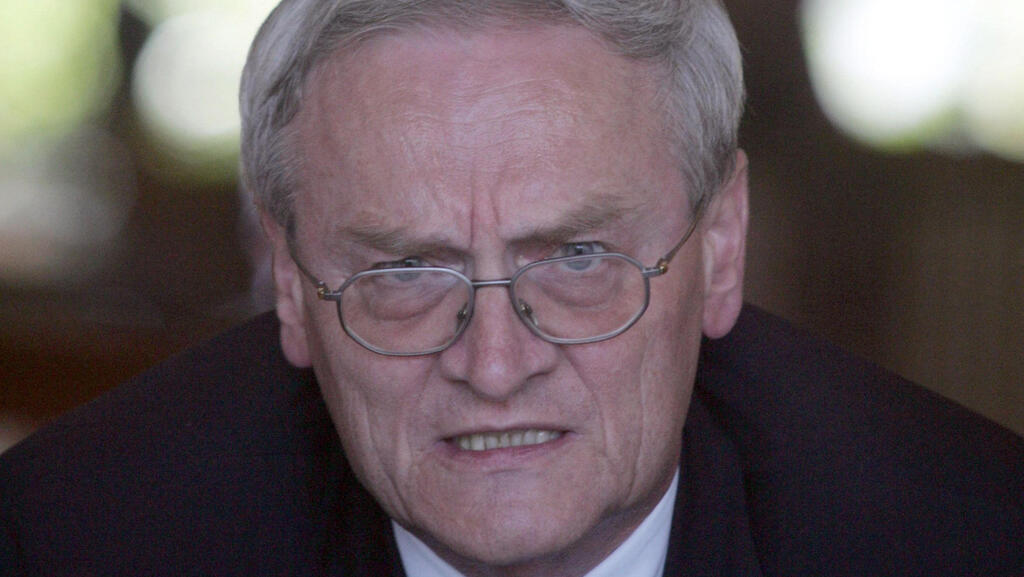
Police have arrested the former head of Germany's BND foreign intelligence agency, August Hanning, on suspicion of espionage, the federal prosecutor's office announced Tuesday.
Hanning served as the agency's chief from December 1998 to November 2005, before moving to the Federal Interior Ministry where he worked as state secretary until November 2009.
According to a statement from the prosecutor's office, he is facing charges including alleged espionage, disclosure of state secrets, attempted treason, and working as a secret service agent.
The statement added that another former high-ranking employee of the BND had also been arrested on suspicion of providing Hanning with hundreds of classified documents in exchange for payment.
DW's chief political editor Michaela Küfner, reporting from a government press briefing on the arrest, described the case as Germany's "biggest espionage scandal of the century unfolding in real time."
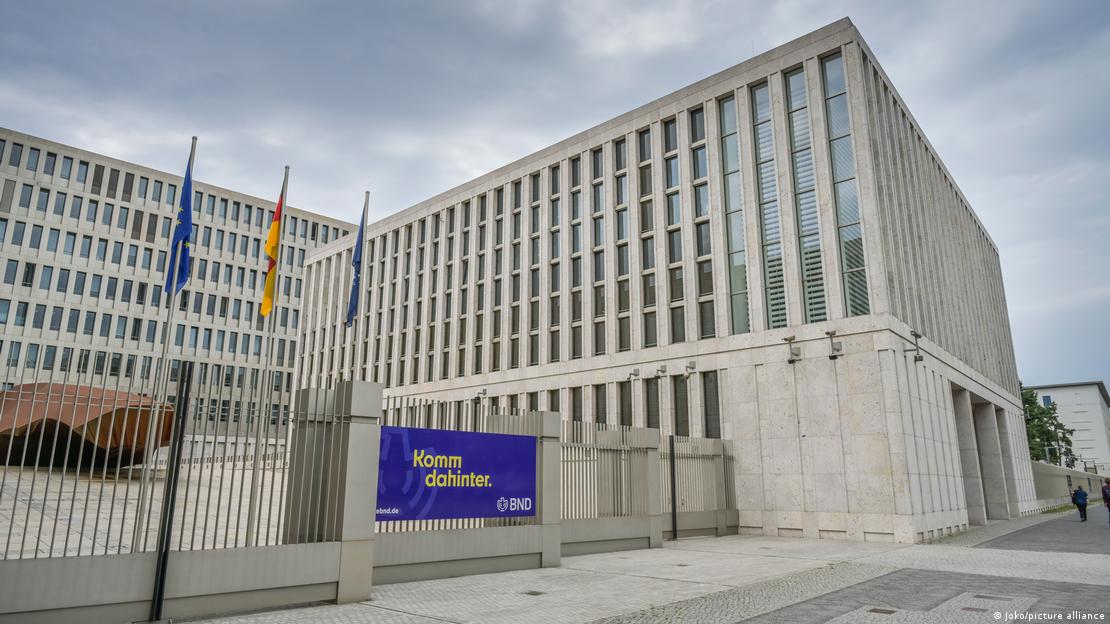
Hanning's alleged informant worked as chief of staff for multiple BND heads
Image: Joko/picture alliance
What else do we know about the investigation?
Police arrested Hanning early Tuesday at his home in Nordwalde near the western German city of Münster, according to information from WDR, NDR and the Süddeutsche Zeitung.
Hanning's alleged accomplice, who was identified only as Manfred D. in line with Germany's privacy laws, was taken into custody in Bavaria.
Authorities were conducting searches at both suspects' properties, as well as in Berlin, the prosecutor said.
During Hanning's tenure as spy head, D. served as his chief of staff. He also subsequently worked under Hanning at the Interior Ministry until 2009.
He is facing charges of "aiding and abetting attempted treason and espionage against the state."
Marc Henrichmann, who chairs the German parliament's intelligence oversight committee, said following the arrests that Germany "will not tolerate the betrayal of secrets."
"Whoever allies themselves with the enemies of our liberal democracy will be found out," he said in comments to the AFP news agency.
The investigation in Hanning reportedly began due to his connection to a high-profile trial involving businesswoman Christine Block.
2,000 documents allegedly handed over to Hanning
The prosector's office said Hanning and Manfred D. are believed to have come up with their arrangement in 2010.
From 2012 to March 2026, D. served as chief of staff to Hanning's successors at the BND spy agency, where he had access to a wealth of classified documents, according to the prosecutor's statement.
"The current findings suggest that, over the years, Manfred D. provided Hanning with approximately 2,000 documents, many of which contained classified information to be used exclusively by the Federal Intelligence Service for internal purposes," the statement said.
It added that D. is alleged to have provided Hanning with information until at least mid-2022, and that Hanning used that information in his private consulting work.
Hanning is also accused of being "in close contact with a representative of another foreign intelligence service, to whom he passed on political information, partially based on material provided by Manfred D., for several years," the statement said.
The prosecutor's office did not say which foreign intelligence service was involved.
The two suspects are expected to appear before an investigating judge on Tuesday and Wednesday.
Edited by: Elizabeth Schumacher
Don't let the algorithm hide the news. If you rely on our team for trusted reporting, please take a moment to select us as your Preferred Source on Google, so you'll always see our verified news first.
 Log in